
I cannot count the times that people have asked me if I miss being a midwife. The truth is I miss the unparalleled experience of guiding a new life into this world, I miss the environment of a hospital delivery suite and the rush that comes with such responsibility and clinical input. However, I cannot say I miss being a midwife because in my heart that is what I am. It is what I will always be. I was called to the vocation of midwifery and as a midwife I have been called to serve God using every skill and experience I have. This midwife is no longer called. She has heard the Call and is navigating her way through the human interpretation of such.
The word midwife is derived from Old Middle English and interprets directly to mean ‘with woman’. I think the single most common incorrect assumption people make when they hear the term, midwife, is to imagine a gentle nurse rocking babies back and forth in her arms. Nothing could be further from the truth. A midwife more commonly finds herself linked to a woman from around the 8thweek of pregnancy until around two weeks after the baby has been delivered. On average 34 weeks in total. Less than 7% of this time will be spent with a delivered baby. In other words, midwifery truly lives up to its name. It’s all about the momma. The women. Most importantly being with the women.
The oxford dictionary defines the word ‘with’ in several ways not least of which means, to accompany. How perfect is such a description, to accompany a woman on the journey of childbearing and birth? Not to instruct, not to demand, not to tell, but to accompany, walk along side of, to be present with…it oozes love, compassion and relational interaction and is a very far cry from anything dictatorial or merely of medical function. Clinical research over the years has demonstrated that the more consistency a women experiences in labour the greater the likelihood of a non-invasive natural birthing experience. Research has shown that when the constraints of a busy delivery suite mean that women are left unattended and without consistent support the likelihood of an instrumental or operative delivery dramatically increases. Back to our scenario of a midwife who ‘accompanies woman’ and we can see the evidence of the need of this proven in clinical form not just in affectionate idealist rhetoric. Bottom line is when we walk with a woman the outcome for her and her baby is better. It is that simple.
The instinct of a midwife who truly engages with her patient is like a dance. I once heard that a famous dance routine between the legendary Ginger Rogers and Fred Astaire took over 5 weeks to perfect in filming. The product was beautiful and unmistakably effortless in its appearance but the effort to achieve this was momentous. So too is the dance of the midwife and her patient. In years past a midwife would have walked every step of the journey from early pregnancy to the discharge from care of a healthy mother and infant. In our current times midwives have to find their footing quickly in the intensely dramatic setting of the labour room.
In an instant two people become connected one to the other, regardless of appearance, personal preference or personality. For the woman, this is the person that will escort her through one of the most trying experiences of her life. This is the person who is responsible for her safety, for her unborn child. Not every situation has instant chemistry and this often produces the most electrifying dance of all. Some will instantly find their partnership compatible and comfortable, that veritable meeting of minds which is inexplicable to all. While for others it is an intense effort to commit in trust to each other regardless of all and any reservations.
For the midwife her success will depend on the participation and trust she earns from her patient. Labour and delivery require a co-operation and intimacy that isn’t seen anywhere else in the medical repertoire. Ultimately, caesarean section aside, a baby cannot be forcibly removed from its mother, her participation in the mechanisms of labour are essential to it meeting its end.
As this dance progresses, what begins as an uneasy partnership based on need morphs into a crude trust one to the other. The excessive pains of labour often see women drift from the support of a loving birth companion to an absolute focus and dependency on their midwife. Even when complications necessitate the presence of other medical attendants the women will remain utterly focussed on her dance partner, her midwife. The dance remains a duo but for a chorus line of performers. It is a prepossessing experience that I’ve yet to encounter in any other environment.
Somewhat out of alignment with this intense and consuming moment in life is the memory it leaves in its wake. Psychologically a positive birthing environment has no end of benefits to the child and mother all of which are easily discovered and well documented. It is the personal memory or the lack thereof that is somewhat baffling. Most women will struggle to recall the name or the appearance of their midwife in the days, weeks, months and years after the event. Without written or photographic memory prompts there is all too often a sincere blank. This is made even more confounding when the same woman will recall with ease the carer who briefly looked after her in the postnatal arena, regardless of how short the duration may be. However, every woman will recall how they felt towards their delivery room midwife. The positivity or sadly at times the angst and disappointment. It is not the person who stands foremost in the mind it is the memory of the experience.
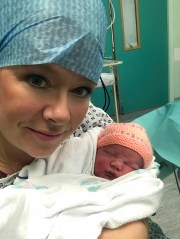 The dance lives on long in the heart of those who partnered for that fleeting, but deeply intimate moment in time. Truly it is this unique circumstance of life that captures my heart and my calling. To become part of a positive memory that pays little or no heed to me as a person but which leaves behind a legacy that can positively imprint on the ongoing lives of a women and child feels very much like my reason to exist. I am learning that the dance of the midwife can indeed occur somewhere other the delivery room and it compels me body, mind and soul.
 Delivering Love
Leave a comment