Some years ago I studied for a post-graduate degree and part of my specialism was in the subject of grief and loss. At the time , still a practising midwife, I was motivated by the mothers who endured the unfathomable loss of a baby at all stages of pregnancy. In reality what I learned , what I studied, became perhaps some of the most life relevant academic work I have ever participated in. Even as I researched and read during the learning process people and situations, both professional and personal kept jumping into my mind. There were more than a few “aha” moments (as Oprah likes to call them). Tiny frissons of putting two and two together and at last seeing the four. Honestly I felt at times ashamed at my lack of internal empathy, and I am a very empathetic person, but suddenly I realised that everything I had presumed about grief was at best, a dot on the horizon and at worst just ignorant.
The sudden dawning that grief is not always about death was quite enlightening to say the least. Yes of course I knew that people grieve when they lose businesses, homes, relationships and the like, it was more the realisation that it was more than a momentary emotion. Just like when someone dies , there is a process, and that process is often far from short or straightforward. As with most grief it is also frequently unrecognised and shown little respect and regard. It is very easy to presume that the person who has lost their beautiful home is happy and grateful in their small flat , we do it subconsciously and without malice. Why? Many reasons but at the forefront has to be the fear of having to ‘do something’. When we acknowledge the pain or suffering of mother human being we are then bound by our emotions to ‘do something’. As a general rule we don’t avoid this because we are a bunch of heartless care less types. Rather because we have no idea what to do. The sad truth is that there is little we can do other than acknowledge the pain of another with sincerity and heartfelt care. The even sadder truth is that often this is all a person suffering really wants and indeed needs.
Basically we rob people of much needed love and care because we think we are not good enough and have nothing to offer. Nothing is further from the truth.
I imagine many of you , if I were to ask, would talk about the stages of grief. What a person goes through after a loss. These stages of grief were first penned by Elizabeth Kubler-Ross in the late 60’s. She wasn’t the first but she is perhaps the most widely known. When anyone talks about grief they tend to refer to her stages of grief
- Denial/shock
- Anger/resentment/guilt
- Bargaining
- Depression
- Acceptance
Sound familiar?
The very short version was that all of these stages had to be gone through or else the individual would suffer complications in their life , for example depression or addictions. Later in the 1980’s along with some others it was amended slightly to show that this was not something a person necessarily did one step ahead of the others… it was something that may be done in differing order and some of the stages may also be revisited more than once. This was indeed progress , but it entirely omitted to acknowledge why some people experienced ALL of these stages and STILL found themselves trapped in grief, depression and often other unwanted behaviours.
One of the most amazing things about this theory is that it was never really properly studied in a clinical trial or study… in other words it just became the go to without any real evidence to back it up. Perhaps because for some people it really worked , it was perfect for them. However it is a theory that seems to have stuck in the minds of the everyday person and it is absolutely not a one size fits all. While the trained person such as a grief counsellor or psychologist knows this well and practises with a wealth of clinical knowledge and theories , the everyday person thinks this is it. What’s worse, grief counselling is not something that is actively sought nor available and as a result people often end up needing support for other issues , such as depression or alcohol dependency and the grief falls down the pecking order. The truth is one cannot be resolved without the other.
There are lots of theories about grief and in the interest of not boring you silly I want to talk about one particular aspect. This is called the 7 mediators of loss . This is a way for us to get away from the one size fits all idea of grief, and it’s also a way for us to really see why at this particular time in society grief and loss is going to be impactful on many for a long time to come. Now every grief counsellor will tell you that there is still a need for people to walk through the stages of their own grief – some call it “the tasks of grieving’. That’s another blog altogether . This wee blog is about understanding why we grieve a certain way, why we behave a certain way during and after grief and why it’s important to never presume that someone should be “over it” by now.
Basically in order to get a grasp on the first rung of the grief ladder, we need to understand a few things. That’s what the 7 mediators really mean. In other words ..
Seven things that may affect the way you grieve. In these unprecedented times you will begin to understand as we talk about each one how important it is.
So let’s dive in
Who was the person that died?
This one is straightforward – who died and how were they related to the person grieving .. mother, father, child, friend , extended family member, business partner… this is a long list. The natural presumption is that certain losses are harder than others. Well of course the loss of a loving mother is incomparable to that of a neighbour. But this isn’t about a lineage of importance. It’s about understanding why a loss has affected you so much. This leads on to the second factor .
What was the attachment to the person who died?
Ah now we are in a different space and time all together. We as humans make easy presumptions about loss. We imagine those we love the most to be the most difficult to grieve. This isn’t always the case. A loved mother or father who has lived a long and purposeful life and who passes peacefully in their old age of course illicit a profound grief. But if there are none of the complications we will talk about in a minute then it can be process that although painful is not one of lasting pain and difficulty. THE LOSS IS LASTING BUT THE BRUTALITY OF IT IS NOT. So we ask ourselves what was our relationship to this person? Did we regrets and recriminations? Are we feeling angry toward that person? Are we numb and unable to comprehend? Will the loss of this person cause us to have to reassess our identity. Knowing this matters. Asking ourselves these questions matter. What if the neighbour mentioned in the first statement was the person that a frantic abuse victim could run to for solace? The complexities are often subtle and hidden.
How did the person die? AND The geographical proximity to the death
This is part that I think will be influenced like never before by the coronavirus pandemic. Not just those mourning someone who has died because of the pandemic, but those who have died, unrelatedly, during the pandemic. The lockdown losses. This has always been a significant factor for those who are bereaved , but usually the focus tends to lean towards sudden unexpected deaths such as heart attacks, strokes, brain aneurisms. Or for those lost through violence and trauma, accidents, crime etc. Then there are those who lose more than one person of significance at the same time. Losses that are stigmatised (often called disenfranchised ) such as a pregnancy, an infant, a troubled family member, death in custody and the like. Deaths that could have been prevented like suicide or carelessness. Last but not least is the proximity of the death.Under usual circumstances this generally refers to people who live far from loved ones, or who simply didn’t make it in time. However in this climate we are living in what has historically been an unfortunate situation has become the normal. Families asked to chose who sits by the bedside and who cannot, if that is possible at all. People dying alone and the trauma this brings to their loved ones. Added in to the mix are all of those who had no physical contact with their loved ones in the days/weeks leading up to their deaths due to the restrictions of lockdown and infection control. We are in the unprecedented situation of having a whole massive portion of society plunged into a complicated grieving process that cannot possibly resolve through the simplicity of five steps.
Often this proximity stuff was linked to hospital v home passings. Most people grieving easier when they had open and free access to their loved ones. That’s why hospices are so vital . They are that middle ground between hospital and home. During corona virus even hospices are forced to be like hospitals. There is significant comfort for loved ones when they can reflect on a persons last days. Often the natural deterioration of a person provides comfort to those who love them after they’ve passed. That knowledge that they couldn’t have gone on any longer helps to process their absence. What do you do if the last time you saw your beloved was pre lockdown and they were fit and well? So now we have a double complication of geography AND reality. It is very hard to understand that someone is gone when no part of your being was prepared or thinking such a thing was possible.
In truth it’s a battle between a known reality and a mind that cannot quite grasp what it is trying to understand.
The grief of so many will truly only be able to begin in the months and years that follow lockdown . As a society we must be absolutely committed to patience and understanding for these poor souls, and always show a willing and open heart to something we must surely be thankful to have not experienced.
What’s the bereavement and loss experiences of the person before this loss?
That age old men v women situation is sadly never more relevant than in the experience of grief. While there are always exceptions, the stark facts show that women grieve more openly than men, and as a result men are more likely to experience complications from grief.
Then there are the children, the reactions of children to grief are some of the most complex and challenging there is. With no frame of reference or indeed a lack of emotional maturity many struggle to understand their own feelings and more importantly lack the ability to make their feelings known. However to the contrary sometimes children are simply intrinsically accepting of a loss and go on in a manner that feels wrong to the adults around them. It is not wrong. However again we see how the lockdown affects all of this so significantly. When a person is driven forcefully by their inner needs to have normality but cannot the possibility of a straightforward grief experience is completely obliterated.
Those with pre existing mental health issues may find a loss an incredible strain on an already fragile situation. Often support will be redoubled for such a person through existing support networks and professionals .. then came corona and suddenly such services are limited at best.
It is also vital to mention the professionals at this point. Dr’s , nurses, councillors and the like. It matters not one bit how experienced a person is in handling or witnessing the grief of others , they will find a personal loss just as difficult and human as anyone else. Indeed for many the feeling of ‘they should know’ and expectations to support others may in turn lead them into a spiral of difficulty that is oppressive and hard to recover from. It is not easy for anyone to reach out for help , support and loving kindness, even more so when you are the person that others reach out to.
Personality
There is no question that a persons personality, their emotional intelligence, their experiences as a child , will greatly influence how they grieve. More importantly it greatly impacts the outcome of their grief. Someone with a naturally positive, robust and well understood emotional capacity will be more likely to have a positive experience in life after the grieving process. So it is vital that we understand that in the desperately trying times we live in during the pandemic that we understand that robustness of spirit is not always present. In modern day language this is described as RESILIENCE. The truth being that some of us are simply more resilient than others. While we now know the importance of helping (especially children) people become more resilient, this has never been more challenging than it is now.
Social Support
The feelings of social isolation that accompany grief can become all consuming for some. Even when this is not true and there is support readily available, the nature of loss is so personal thats some people just cannot feel the support of another , even when its there. In a time of extreme isolation, separation and loss this feeling has a feeding ground to flourish. Please continue to show love and support regardless of whether it seems to be impactful or not. Do not give up . Many studies show that those with a positive support network will have a significantly better outcome than others who do not. Send those flowers, cards, texts… and do so long after the immediate passing. Your worry of getting it wrong is insignificant in the grand picture . Better to get to wrong lovingly trying than to not try at all.
Stresses that walk hand in hand with the bereavement
It is a sad and horrific fact of life that when someone dies life demands to go on. The practicalities of living can often be complex and utterly overwhelming. The mum that as to suddenly be both parents while grieving the loss of her love. The battle to pay mortgages and bills when a sudden loss is not supported by life insurance . The basic loss of income, emotional companionship and love of someone so vital to your existence. Perhaps the deceased was a caregiver and as well as grieving a person has to endure the trials of a new and unfamiliar support. The list here is endless . With so many companies offering only skeletal business support this must be utterly consuming for people . It is also a means by which some can offer their skills, ability and expertise to help to relive burdens. However in a situation where we are locked down the uncertainty for many will be greatly exacerbated and ordinary stresses that can greatly impact the mourning will be multiplied no end.
In these times of Covid-19 , lockdown and loss I hope this wee blog might help people have new understanding of grief . There is so much more to grief and bereavement but my honest desire is that people may learn why grieving at this time is different and is already complicated so where possible they can reach out for support. All over the world there are amazing organisations that you can reach out to at a time of loss, please don’t hesitate. Also I hope that reading this some of you will have a greater understanding of what your loved ones, neighbours and friends are experiencing and at the very least you can say those all important words ” I care”.
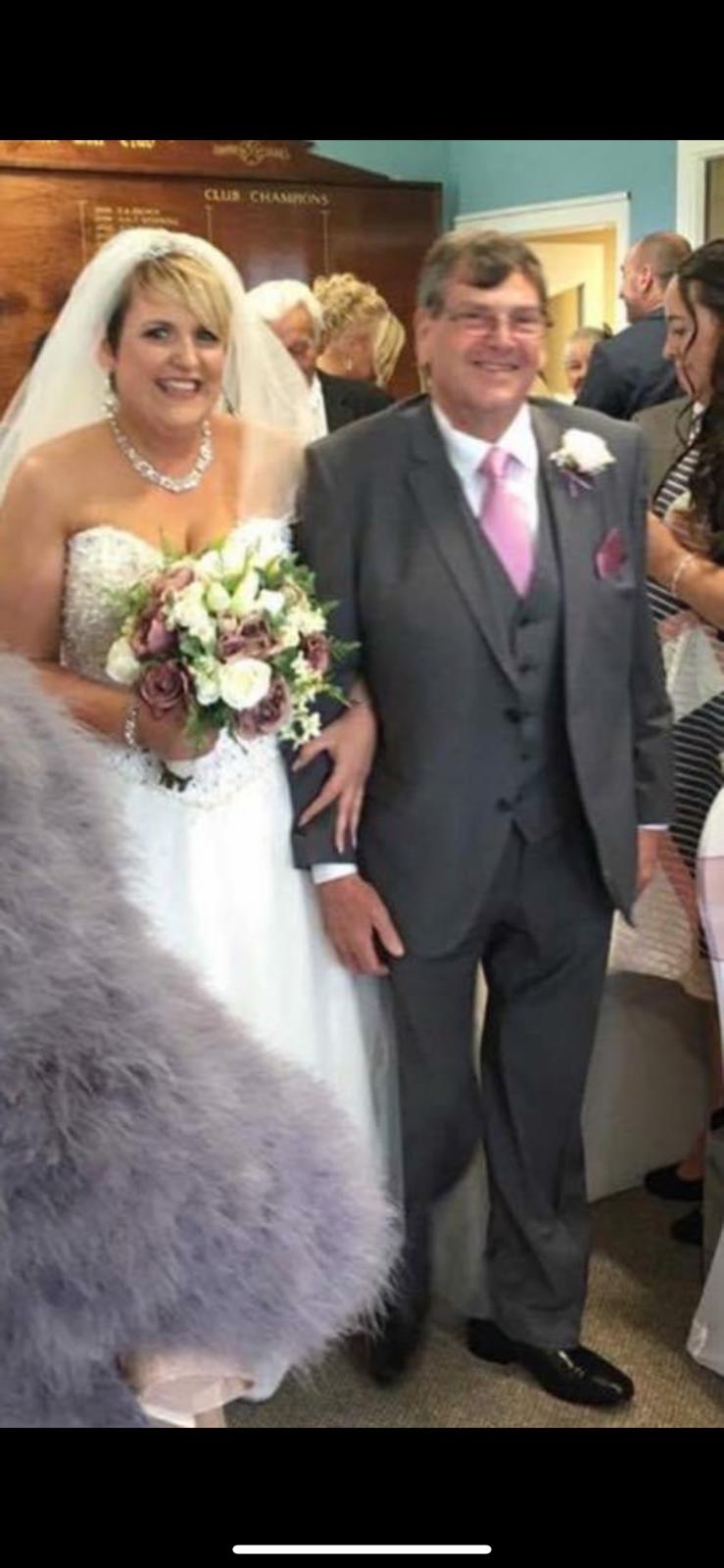
My beautiful friend Denise and her dad Donald, who sadly lost his battle with coronavirus on Easter Sunday morning 01.35 12th April 2020 (photo printed with permission and of Denises choosing)

 Delivering Love
Leave a reply to Margaret Cancel reply